Review of Raymarine’s Element (7HV, 9HV, 12HV)
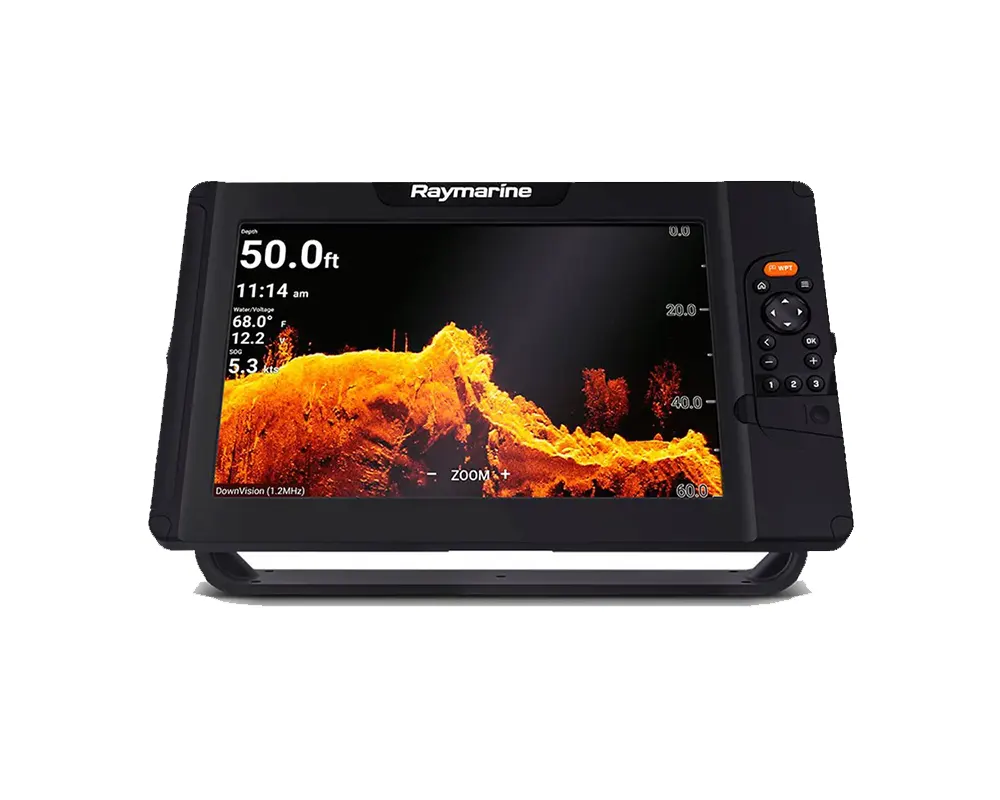
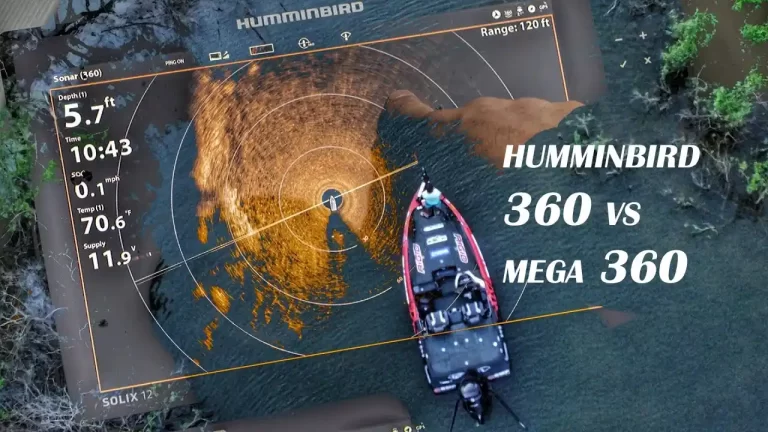
The advent of the Element series fills a long-standing product need for Raymarine. The Humminbird HELIX and, to a lesser extent, the Garmin Echomap devices face direct competition from the Element systems’ high-detail megahertz imaging, CHIRP sonar, and live mapping capabilities. After reading our review, you will be able to determine if the Raymarine Element is the best fish finder for you because we will break down the features and characteristics.
Raymarine Element Series Overview
Table could not be displayed.Technical details and key functions described
3 Common Sizes: All three of the recreational fishing boat sizes that are thought to be the most common and well-liked are available in the Element series. There are three sizes available: a little boat and budget-conscious 7-inch model (7HV), a 9-inch model (9HV), and a high-end 12-inch big-screen device (12HV).
Bright 1500 Nit Displays: Element fish finders have an LCD screen that is incredibly bright and is easily readable in direct sunlight as well as at an angle. This screen, is one of the brightest ones available, with a brightness of 1500 nits. The side viewing angles of the 7HV and 8HV are both 70 degrees, but the 12HV, which has an overall better screen, has wide viewing angles of 89 degrees. The screens are also touchless, just like the Helix devices.
Intuitive Keypad Control: Uncomplicated Keypad Control Although the keypad layout is not very impressive, everything is laid out properly, and the icons are straightforward enough for anyone to comprehend. Back and OK, as well as + and -, are placed below a four-directional key, while Home and Menu are situated above it. Three buttons in the bottom row let you save your preferred views for later, simple access. The Waypoint button was ultimately given additional significance by being given an orange color and being positioned prominently at the top. In comparison to the Helix, which was already fairly simple, this design is much more user-friendly. The waypoint is a big orange button.
Quad-Core Processors: These Units Had Better Have Some Horsepower Behind Them to Make Sure Everything Runs Smoothly Given the Sonar and Mapping Capabilities of These Units. Having a screen that updates slowly is quite annoying. The Element’s powerful quad-core CPU can handle 3D RealVision’s intricate images and HyperVision’s detailed imagery, which is fantastic news.
OS by LightHouse Sport: An optimized version of the LightHouse operating system created especially for fishing is used by the Elements. The more complex navigational or system capabilities are absent from this version.
Rear Connectors: Two Two elongated connectors that have IP67 certification are situated on the back panel. A 15-pin connector is used for the sonar, while an 8-pin connector is used for power and NMEA2000. This architecture is simple and effective compared to the five possible connectors of the helix.
Connectivity: The Element offers a range of connectivity options, including built-in Wi-Fi, Bluetooth, NMEA2000, and SeaTalkng networking. These options can be expanded with the purchase of an A06045 adapter cable.
A transducer as well as a sonar
All-in-One Transducer: The powerful HV100 transducer gives the device All-in-One sonar capabilities. It houses the sonar crystals for CHIRP, RealVision (3D), HyperVision, SideVision, and DownVision. It has a massive round connector with 15 pins that, when connected to a unit, is nice and secure, but I’m sure it would be a hassle to fish through the gunnels of a fiberglass boat. It is larger than the Helix MEGA+ transducer, as evidenced by its overall measurements of 8 inches in length, 2-1/4 inches in width, and 1-5/8 inches in height.
Imaging with HyperVision 1.2MHz: The HyperVision marketing screenshots show an exceptional level of sharpness and detail, however, there is a little flaw with them in that they do not show the range of the images. Despite their claims that the range is 100 feet in each direction, it is impossible to tell from the images how far away it is. It might be 40 feet long or 100 feet long. In contrast, numerous screenshots of the Helix MSI G3N’s side imaging show a range of up to 200 feet in specific situations, with an average of 150 feet.

Extended Band 380kHz Both down vision and side vision: The HV100 transducer’s standard imaging frequencies are 380 kHz, which is considerably lower than the typical 455 kHz that most anglers are used to utilizing. Given that the equilibrium was found to be 1.2 MHz and 380 kHz, it can be assumed that the crystals inside had a dual frequency. While DownVision has a staggering depth range of 600 feet, SideVision has an exceptional range of 300 feet on each side.
CHIRP Sonar: Although there is no information on the frequency bandwidth, the 2D sonar functions in the 200 kHz range. It is plausible to assume that, like the Axiom series, it has a bandwidth of 60 kHz that is centered on 200 kHz.
Maps and GPS
Multiple Mapping Options: Element units have a choice of Raymarine LightHouse NC2 charts with Fishing Hot Spots, Navionics, or C-MAP as its main mapping software. The great majority of freshwater fishermen will undoubtedly utilize Navionics.
The word “bathymetric,” which appears in the name of Raymarine’s RealBathy software, is abbreviated as “bathy,” or “bathy.” The word “healthy” is derived from the term “bathymetric,” which describes the measurement of water depth. Putting the name aside, this is the Raymarine device’s live mapping feature, which enables you to create customized contour maps of the lakes and fishing spots that are most significant to you.
What’s in the Box, exactly?
Element 9 HV by Raymarine
- A portable sun canopy
- A bracket and mounting hardware for a trunnion/gimbal
- A surface/flush mount kit and mounting hardware
- A 1.5-meter (5-foot) long NMEA2000 cable
- Documentation and/or an operating instructions manual
- Mapping (optional)
- HV-100 Transducer with a cable that is 20 feet (6 meters) long
- Cable P-clips and the associated hardware
- The transom-mounted transducer bracket
- The escutcheon plate and all required hardware

Would Use a Raymarine Element Benefit You?
Beautiful MHz Imaging HyperVision imaging appears to have the potential to create some spectacular photos based on the screenshots. The images that have been posted up to this point are the highest quality and closest to Humminbird MEGA.
Along with the more traditional Side and DownVision for more depth and range, the All-in-One Transducer also offers you the most latest imaging technology known as a hypervisor. For your convenience, the installation of a single transducer includes a wide spectrum of CHIRP 2D sonar and RealVision 3D capabilities.
Live Mapping: With RealBathy, Raymarine is attempting to capitalize on the current trend of creating customized maps.
Excellent Connectivity: It is suited for a huge number of anglers because Wi-Fi and Bluetooth are pre-installed right out of the box. Boat owners who want to build up a more reliable network aboard their boats can do so easily by using a SeaTalk adaptor cable.
Big and Small: The Element comes in just three sizes, compared to HELIX’s five different models, but each of those three sizes is perfectly suited to its corresponding category. Kayaks, smaller boats, and other types of vessels can all be used with the 7 HV. If your bass boat is bigger and your pocketbook is deeper, you can pick between a 9- or 12-inch screen. You won’t want to go back to level 1 after you reach level 12.
Price: The prices of the 12 and 9 are equal to those of the HELX 9 MSI+ G3N and HELX 12 MSI+ G3N, respectively. In contrast, the prices of the 7HV are much more expensive than those of a HELIX 7 MSI G3N.
Even though memory card slots are expensive, this is a somewhat depressing trend. There is only one accessible microSD slot. Your mapping chip will fit in the only available card slot because there is only one accessible. You will need to utilize another method, such as applications or Wi-Fi, to retrieve screenshots from the device.
In summary,
The Raymarine Element fish detector provides every feature a boater might want in a fish finder. Sharp pictures, CHIRP conventional sonar, 3D, and special live mapping. Powerful CPUs. A range of screen sizes to fit any budget. We think the Element is the best replacement for the HELIX if you’re interested in upgrading, so consider that if you’re shopping for a new computer.